

What Is a Montessori Art Curriculum?
A Montessori art curriculum is a structured, sequential framework for introducing visual art to children in a Montessori environment. Unlike a general art program, a Montessori-aligned curriculum applies the same principles that guide every other area of the classroom: isolation of difficulty, independence, control of error, and developmental sequencing. The goal is not to produce finished artwork. It is to build visual art literacy the same way the classroom builds reading and mathematical literacy — one carefully prepared step at a time.
Montessori philosophy provides the pedagogical foundation. What has been missing is a visual art framework built on top of it.

The Science Art Method®, developed by Spramani Elaun over more than twenty years of work inside Montessori environments, is that framework. It applies Montessori principles specifically to the introduction and sequencing of visual art mediums — something standard Montessori training has never included.

Why Most Montessori Classrooms Do Not Have One
Montessori training is comprehensive. Guides leave certification programs with albums for Practical Life, Sensorial, Language, Mathematics, and Cultural work. There is no album for visual art.
This is not a flaw in Montessori philosophy. Maria Montessori’s writing on the hand and its relationship to the developing mind is some of the most compelling educational writing on creative work that exists. But visual art was never systematized within the Montessori curriculum the way other subject areas were.
What that means in practice is that even deeply trained, experienced guides are left without a map when it comes to the art area. Most adapt by pulling activities from blogs or Pinterest, organizing art around seasonal themes, or defaulting to craft production — activities that look like art but do not develop visual art literacy.
None of these approaches are wrong. They are simply insufficient for a prepared environment that is meant to invite sequential development.

What a Developmentally Aligned Montessori Art Curriculum Actually Includes
Not every art curriculum available for Montessori classrooms is built on Montessori principles. Some are adapted from general art education and layered onto Montessori settings. Others offer activity libraries without developmental sequence. The criteria below are drawn from the Science Art Method® — the first visual art framework developed specifically from inside Montessori pedagogy. They reflect what genuine Montessori alignment looks like in an art curriculum, as distinct from a general art program that has been loosely adapted.

Sequential material introduction. A Montessori art curriculum should introduce art mediums in a specific order based on hand development and cognitive readiness — not by season, not by theme, and not by teacher preference. The sequence matters. Just as the mathematics materials build on one another, art materials should follow a developmental logic the child can navigate independently.
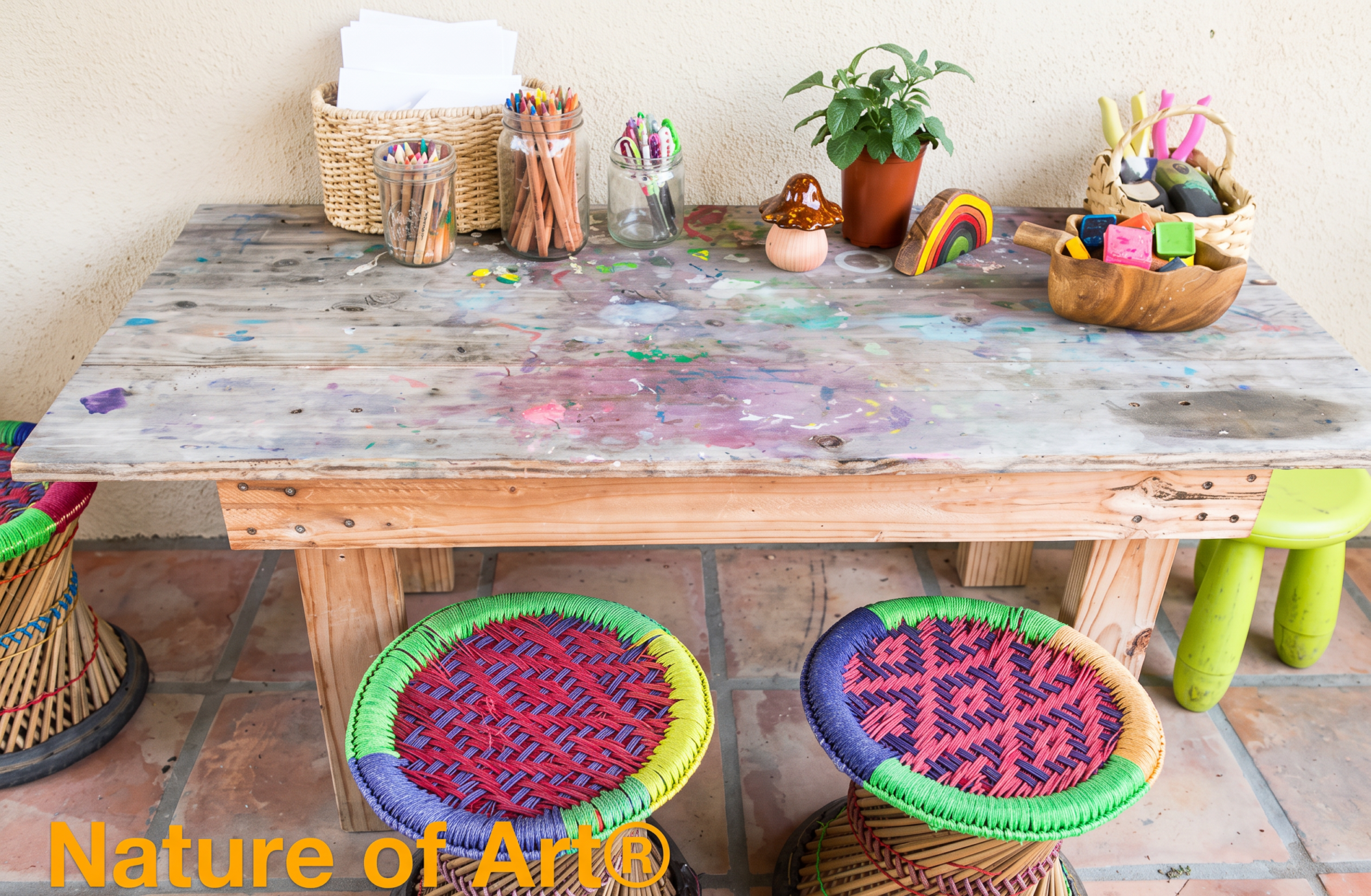
A prepared art environment, not a craft station. The art shelf in a Montessori classroom is not a supply area. It is a prepared environment. Each tray should be designed so a child can select it, work with it, and return it independently. A curriculum that does not address how to stage and maintain the art environment is missing the most important part of Montessori implementation.
Brief, contained demonstrations. Montessori presentations are precise and minimal. An art curriculum built for Montessori should follow the same micro-demonstration principle guides already use across all other curriculum areas. If the curriculum relies on extended teacher instruction or whole-group lessons, it is not structurally Montessori.
No prior art background required. A Montessori art curriculum should be teachable by an educator, not an artist. The framework should give the guide confidence and clarity regardless of their personal art experience.
A developmental framework, not a theme library. Themed art activities (autumn collages, holiday crafts, artist-of-the-month projects) are not a curriculum. A curriculum has a developmental arc. Children move through it as their skills and readiness grow, not according to the calendar.

What Happens When the Art Curriculum Is Missing
Without a structured framework, Montessori classrooms tend toward one of two patterns.
The first is adult-directed craft production. The guide prepares a model. The child reproduces it. The pieces go home looking nearly identical. It is manageable. It is also contrary to every principle that defines Montessori education.
The second is unstructured free exploration. Materials are available. Children choose freely. The guide steps back. This approach honors child autonomy, but without a developmental sequence, children often stall. They repeat the same mark-making because nothing in the environment invites them forward.
Both patterns produce the same result: a classroom where art is present but visual art development is not happening.

Montessori Art Training: What Guides Need Before Choosing a Program
When a school director or guide begins looking for Montessori art training, the options available vary significantly in depth, scope, and alignment with Montessori pedagogy.
What to look for in a Montessori art training program:
The training should have been built specifically for Montessori environments, not adapted from general art education after the fact. The difference is significant. A program developed from inside Montessori applies its principles to the structure of the training itself — not just to the content.
The training should include a practicum component. A guide who learns a framework but never implements it in a real classroom environment does not have professional development. They have information. A practicum bridges that gap and is the primary indicator that a program produces classroom-ready educators.
The training should address the prepared art environment specifically. Setup, staging, material rotation, and how to introduce the art area to children are not peripheral topics. They are the foundation on which everything else rests.
The training should not require the guide to be an artist. This disqualifies most educators before they begin. The right program is built for educators, not art specialists.

The Art Teaching Blueprint: Montessori Art Training Built From the Inside
The Art Teaching Blueprint certification was developed by Spramani Elaun, founder of Nature of Art® and creator of the Science Art Method®. Spramani has spent over twenty years working specifically inside Montessori environments, developing a visual arts system that extends the same principles guides already understand and apply every day.
The Science Art Method® is the pedagogical framework at the center of this certification. It is distinct from Montessori philosophy itself — Montessori provides the principles; the Science Art Method® is the visual art structure built on those principles. No standard Montessori certification program includes this framework, because it does not exist within standard Montessori training. It was created separately, over two decades of direct work in Montessori classrooms, and it belongs to Nature of Art®.

The Art Teaching Blueprint is the only professional certification that trains guides in the Science Art Method®. It is not a general art education course adapted for Montessori classrooms. Every structural element reflects both Montessori pedagogy and the Science Art Method® — from the way the art shelf is prepared to the sequence in which mediums are introduced to the format of the demonstration itself.
Certification requires a minimum of 50 hours of video training, coaching checkpoints, and a practicum assessed by Spramani Elaun directly. No prior art background is required. Guides who complete the certification enter the following school year prepared to build, maintain, and sustain a structured art environment for the children in their care.
The self-paced track is designed to be completed in 7 to 11 weeks. Most guides who enroll in summer complete it before the school year begins.

Frequently Asked Questions
What is the difference between a Montessori art curriculum and a regular children’s art curriculum? Montessori philosophy establishes principles like isolation of difficulty, control of error, independence, and developmental sequencing. A Montessori art curriculum applies those principles specifically to the introduction of visual art mediums. The Science Art Method®, developed by Spramani Elaun, is the framework that first systematized this application. A general children’s art curriculum focuses on activities or techniques without a developmental framework or the environmental design principles that Montessori requires.
Does a Montessori art curriculum need to be taught by a trained art teacher? No. A properly designed Montessori art curriculum is teachable by any Montessori guide regardless of their personal art background. The framework teaches educators how to prepare the environment and guide children developmentally — not how to make art themselves.
What age range does a Montessori art curriculum cover? Montessori art curricula are typically designed for early childhood (ages 3 to 6) and elementary (ages 6 to 12) environments, following the Montessori plane-of-development model. The Science Art Method® by Spramani Elaun covers both planes.
How is an art shelf different from an art supply area? An art shelf in a Montessori classroom is a prepared environment, not a supply station. Each tray is staged so a child can independently select it, complete the work, and return it. Materials are introduced sequentially and rotated intentionally. A supply area offers access to materials. A prepared art shelf invites development.
Where can I learn more about Montessori art training? The Art Teaching Blueprint certification by Spramani Elaun is available at montessori-art.com. Enrollment opens in May and November each year. A waitlist is available at spramani.lpages.co/arttraining2020-waitlist.

About the Author Spramani Elaun is the founder of Nature of Art® and the creator of the Science Art Method®. She is the author of 10 books on visual arts education for children and has trained educators in Montessori art environments for over twenty years. Her work has been implemented in Montessori schools internationally.
montessori-art.com | ecokidsart.com

