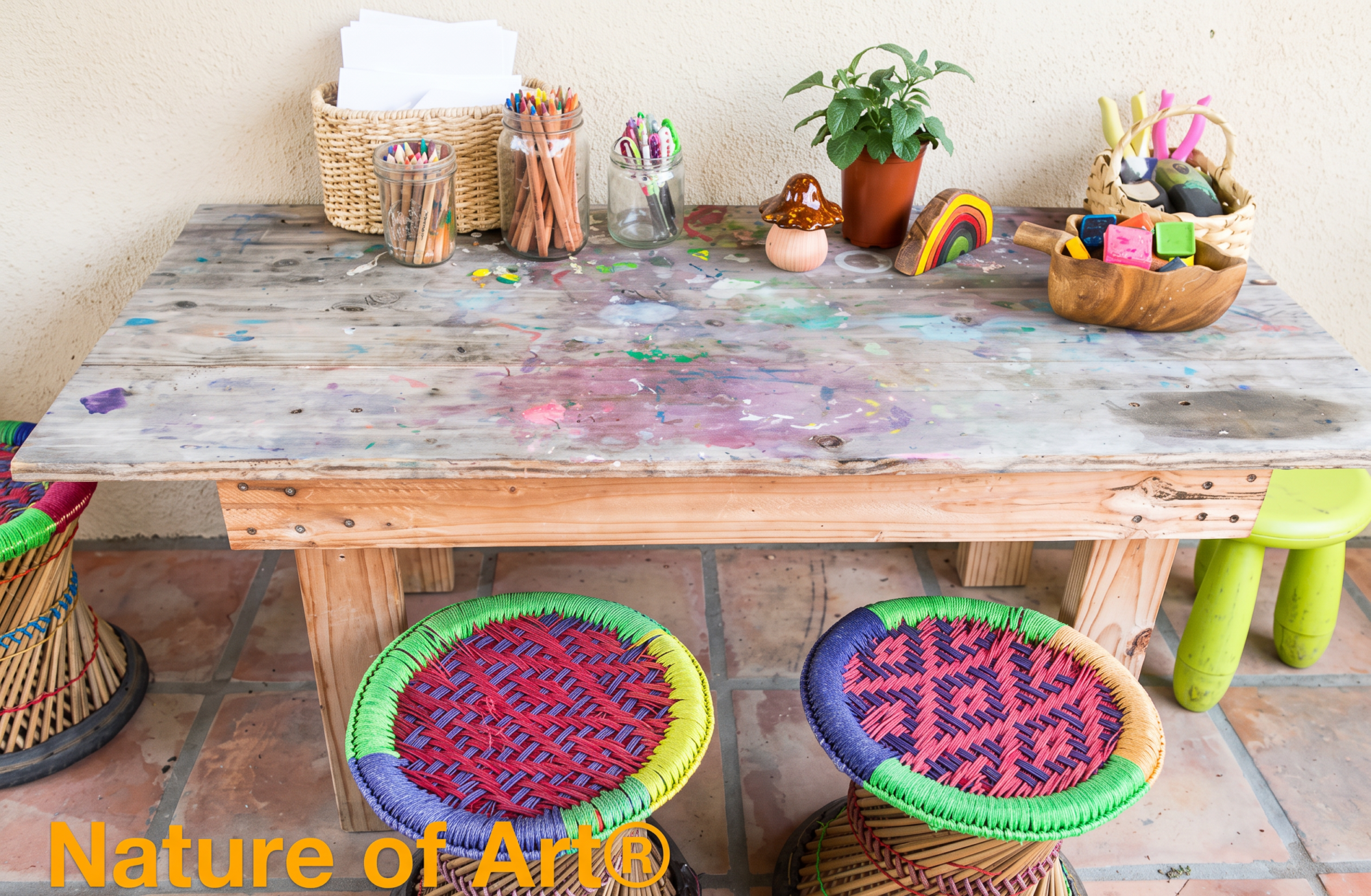


Sensory Art in Early Childhood: Learning Through Hands-On Exploration
Children learn about the world first through their senses. Touch, movement, sight, and physical interaction all play a critical role in early learning, and visual art provides a natural pathway for this kind of development.
Sensory-based art experiences give children opportunities to explore materials directly, using their hands to investigate texture, resistance, weight, motion, and change. These experiences support learning in ways that cannot be replaced by observation alone.

Why Sensory Art Matters
Tactile learning occurs when children touch, manipulate, and move materials with their hands. When a child presses clay, drags a paintbrush, or rubs a crayon across paper, sensory information travels from the skin and muscles to the brain.
Most art-making relies on direct physical interaction. Children build understanding by feeling how materials behave, how paint flows, how clay resists pressure, or how paper responds to cutting and folding. For young learners, sensory exploration is not an extra—it is foundational.
Sensory Learning Supports Different Learners
Some children learn best through movement and physical engagement. Sensory art experiences are especially supportive for children who benefit from kinesthetic learning or who need opportunities to regulate energy and attention. Hands-on art experiences can also support children with sensory, language, or processing differences by offering alternative ways to engage, communicate, and understand concepts.

Building Understanding Through Touch
Visual art experiences support learning beyond sight and sound. Through touch and movement, children begin to understand:
- Cause and effect
- Spatial relationships
- Material properties
- Physical boundaries and control

Designing Sensory Art Experiences
Effective sensory art experiences do not require complicated materials or elaborate projects. They require intentional selection of tools and time for exploration.
Consider art activities that allow children to:
- Press, pinch, roll, and sculpt
- Drag, smear, layer, and dab
- Compare textures and resistances
- Observe changes as materials interact
Providing uninterrupted time for hands-on exploration allows children to build confidence and understanding at their own pace.

Integrating Observation and Recording
One powerful way to extend sensory art experiences is by pairing tactile exploration with close observation.
For example, children can:
- Examine natural objects closely
- Touch and describe textures
- Notice patterns, lines, and shapes
- Record observations through drawing or painting
This process helps children connect sensory experiences with visual representation, strengthening both perception and memory.
Supporting the Learning Process
When leading sensory art experiences, the adult’s role is to:
- Select appropriate materials
- Demonstrate how tools function
- Encourage observation and curiosity
- Allow freedom within safe boundaries
The goal is not to direct outcomes, but to support discovery. Children learn best when they are allowed to explore without pressure to produce a specific result.
A Note on Teaching Approach
The ideas shared here reflect long-term observation and research-informed practice in art education and child development, science art method . They are intended for classroom and home use and are not instructional training materials for educators.
Sensory art experiences are one part of building art literacy and healthy creative habits over time.
About the Instructor
Spramani Elaun is an international art trainer, professional artist, and the author of 10 books on early childhood visual arts education. Over the past two decades, she has developed the Science Art Method™ and certified thousands of Montessori educators, school teachers, and independent guides globally, empowering them to deliver structured, joyful art programs with total developmental clarity.
Learn More
For a deeper look at how sensory learning, movement, and visual perception support children’s artistic development, see:
The Way Children Make Art: The Science Art Method ©2024

fine-motor function tactile exploring opportunities.
A Short Cut Just for You – Professional Development
Art Teaching Blueprint is about to open!

Educational Use Disclaimer
The ideas shared in this article are intended for individual classroom and home use to support children’s visual-arts experiences. They reflect the author’s professional observations and teaching approach developed through years of practice.
This content is not intended to serve as a training manual, certification program, or guide for training other educators. Reproduction, redistribution, or adaptation of these methods for professional training purposes without written permission is not permitted.
For deeper study, professional development, or educator training, please refer to the author’s published books, courses, or official programs.


All rights reserved © 2026, Nature of Art®
Nature of Art® provides art pedagogy
This website and its blogs supports individual educators in teaching children visual arts. It does not authorize professional development, staff training, or adaptation of the Science Art Method™ for institutional use.
No part of this blog may be used or be reproduced in any manner whatsoever including reproducing, publishing, performing, and making any adaptions of the work – including translation into another foreign language without written permission except in the case of brief quotations embodied in critical articles and reviews.
Nature of Art® Publishing P.O. Box 443 Solana Beach, California 92075.
About The Author
