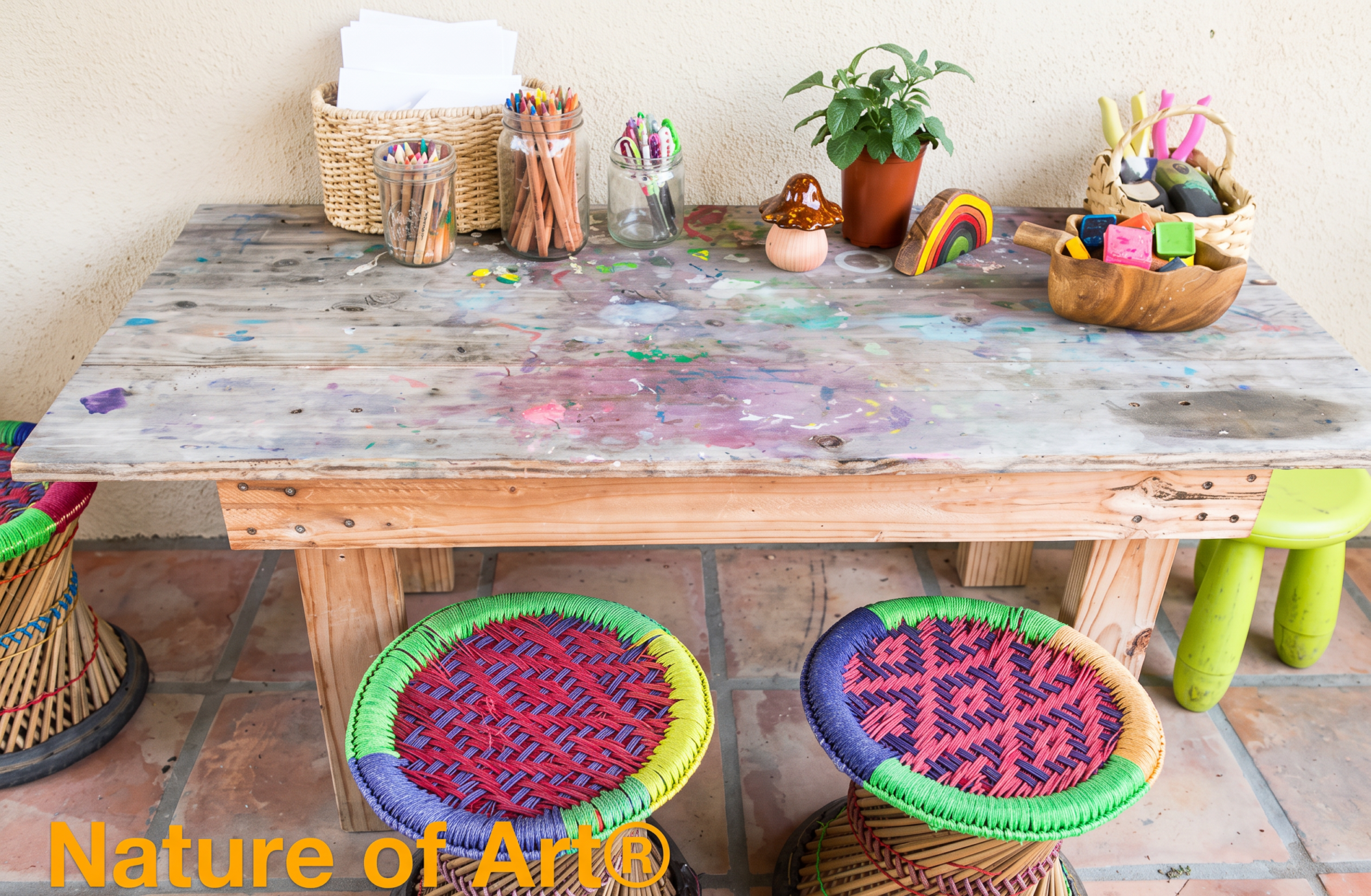


The single biggest reason teachers say they cannot teach art is not resistance—it is a lack of training in visual art literacy. Most educators were never taught the language of visual arts, so they do not feel confident observing, guiding, or extending art experiences in the classroom. There is a pattern I have noticed over 30 years of working in early childhood classrooms, including Montessori environments. In this blog I’m going to share why. teachers say they can’t teach art.
Why do teachers struggle to teach art?
Usually a school brings me in for a training. Before we begin, I ask the room a simple question. I ask who feels confident teaching art. Most of the time, very few hands go up. And yet these are talented, dedicated educators. Many of them have been teaching for years. They understand child development. Teachers know how to observe. Guides know how to prepare an environment with intention.
So what is happening with art?
It Is Not Resistance. It Is a Knowledge Gap.
After a training, teachers will often pull me aside. Quietly. Privately. And they will say something like: “I have been saying no to art in my classroom for years. Not because I don’t believe in it. Because I was afraid someone would find out I didn’t know what I was doing.”
This is the most honest thing I hear in my work—and one of the main reasons teachers struggle to teach art in the classroom. Teachers are not resistant to art. They are undertrained. There is a difference. When a teacher has no framework for what visual arts actually is, the art shelf becomes something to manage rather than something to trust. Teachers avoid it. guides limit it. They call it “free time” because they do not have the language to guide it. And the children sense it.

Visual Arts Has Its Own Language
Every professional discipline has a language. A doctor speaks in medical terms. A lawyer speaks in legal terms. Visual arts is no different. There is a language that belongs to visual arts. Educators who specialize in art learn it. But many teachers were never given access to it. Without that language, a teacher cannot observe what is happening when a child makes art. They cannot respond to it. They cannot extend it. And they cannot connect it to the rest of what they are teaching. This is not a small gap. It is the gap between art as enrichment and art as literacy.

Art Literacy Is Not About Being an Artist
One of the things I help teachers understand early is this: you do not need to be an artist to teach art. When teachers are trained in child development, they are not expected to already be experts in every subject. They learn the language of those subjects so they can bring them to children. Visual arts works the same way.
Art literacy for teachers means understanding what visual arts is, why it matters developmentally, and how it connects to the broader curriculum.
Researchers in many fields have reflected that they wish they had learned to draw, diagram, and visually record their thinking when they were young—not for art’s sake, but for thinking’s sake. This is what art literacy opens up. Not just expression. Cognition.
What Changes When Teachers Understand Art Literacy
When a teacher learns the language of visual arts, something shifts in the classroom. The art shelf stops feeling like a liability. The child who holds up a painting is no longer met with “I like it” or silence. The teacher can actually see what is happening. They can respond. They can invite the child to go further. And children, who have been quietly showing their teachers what they know through their art all along, finally feel seen. The knowledge gap is real. But it is also solvable.

Common Questions About Teaching Art
Why do teachers struggle to teach art?
Most teachers struggle to teach art because they have not been trained in visual art literacy or given a clear framework to guide children’s art experiences.
Do you need to be an artist to teach art?
No. Teaching art is not about being an artist—it is about understanding how children learn through visual expression.
What is art literacy?
Art literacy is the ability to understand, observe, and respond to visual arts in a meaningful and developmentally appropriate way.
If you are ready to approach visual arts with clarity, language, and intention, you can begin with one of my art guides or explore the Art Teaching Blueprint™—a professional training designed to help educators build confidence and understanding in visual arts.
About the Instructor
Spramani Elaun is an international art trainer, professional artist, and the author of 10 books on early childhood visual arts education. Over the past two decades, she has developed the Science Art Method™ and certified thousands of Montessori educators, school teachers, and independent guides globally, empowering them to deliver structured, joyful art programs with total developmental clarity.


All rights reserved © 2026, Nature of Art®
Nature of Art® provides art pedagogy
This website and its blogs supports individual educators in teaching children visual arts. It does not authorize professional development, staff training, or adaptation of the Science Art Method™ for institutional use.
No part of this blog may be used or be reproduced in any manner whatsoever including reproducing, publishing, performing, and making any adaptions of the work – including translation into another foreign language without written permission except in the case of brief quotations embodied in critical articles and reviews.
Nature of Art® Publishing P.O. Box 443 Solana Beach, California 92075.
About The Author
